
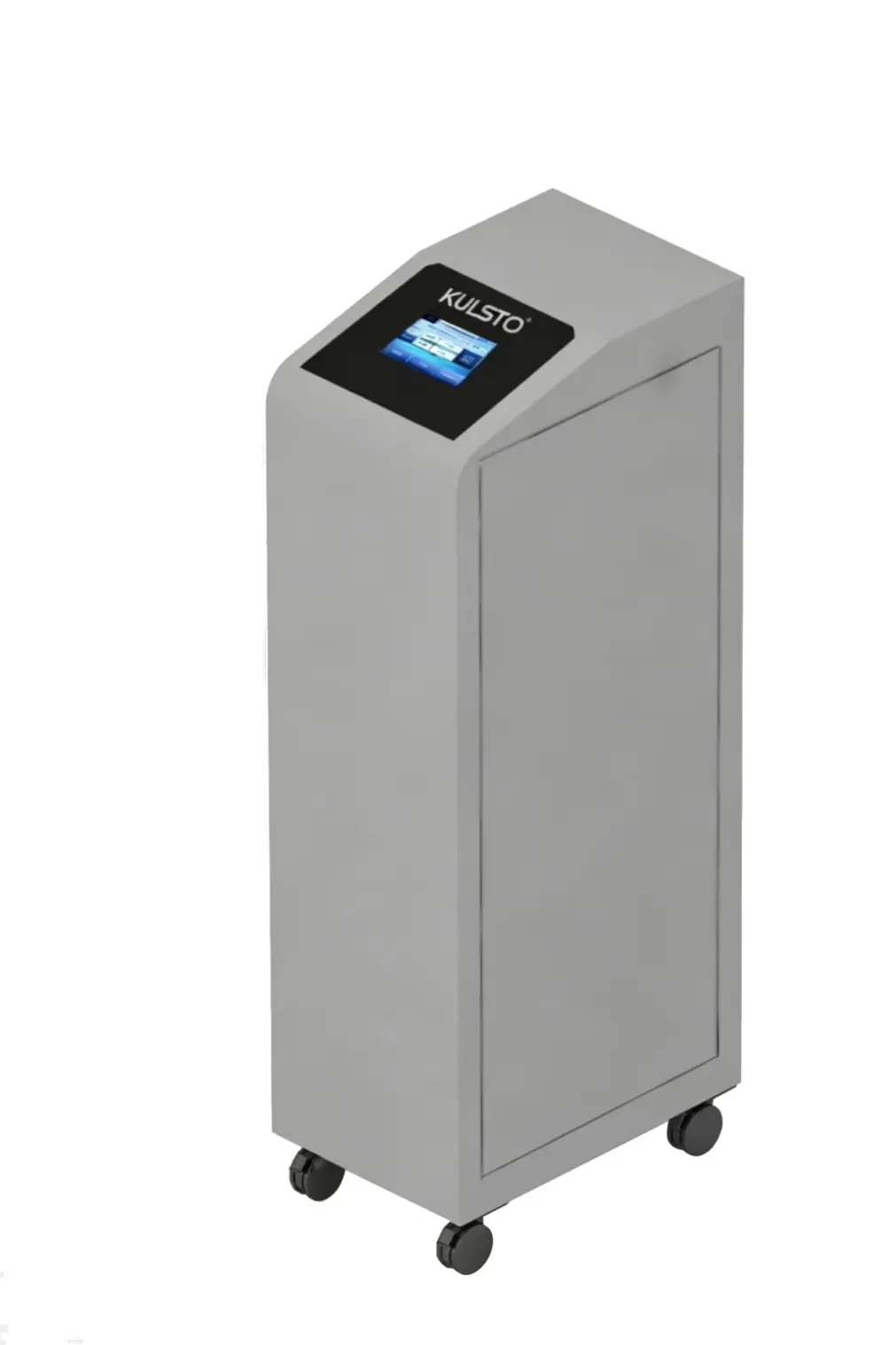
Technical Specifications
| Application | Dialysis-water pretreatment monitoring |
|---|---|
| Sampling | Automatic collection and processing |
| Analysis | Titration method |
| Frequency | User-adjustable cycle |
| Calibration | Automatic calibration |
| Data | Digital storage and terminal upload |
Product Overview
Smart i is an automated digital total-chlorine and hardness monitoring system developed for dialysis-water pretreatment. It uses titration-based analysis to automate sampling, measurement, data processing and remote reporting.
Key Features
Automatic SamplingAutomatic collection of water samples according to configured monitoring cycles.
Automated TitrationTitration-based analysis reduces manual testing workload.
Total Chlorine MonitoringScheduled total-chlorine measurement in the pretreatment process.
Hardness MonitoringAutomated hardness measurement to support pretreatment control.
Automatic CalibrationCalibration functions support measurement stability during long-term operation.
Digital Data ManagementMonitoring results can be stored, uploaded and reviewed remotely.
Monitoring Workflow
Pretreatment → Automatic Sampling → Titration Analysis → Data Upload → Remote Review
Sampling frequency and the facility response procedure are defined during commissioning.
System Design & Functions
- Automates the full monitoring cycle and reduces variability associated with manual sampling and testing.
- Monitoring intervals can be adjusted to site conditions and water-quality risk.
- Automatic calibration supports repeatable measurement over long-term operation.
- Results and trends are uploaded to a terminal for centralized review.
- Mobile access allows equipment managers to review current water-quality status remotely.
Applications
- Dialysis centers and hospital blood-purification departments.
- Pretreatment systems requiring scheduled total-chlorine and hardness checks.
Installation & Integration
- Install at representative pretreatment sampling points.
- Confirm reagent supply, drain, power and network availability during project design.
- Monitoring frequency should follow the facility water-safety plan.
Standards & Service References
- Developed with reference to the 2021 blood purification standard operating procedures.
- Site commissioning, calibration and operator training should be completed before clinical use.
- Measurement data supports management decisions and does not replace the facility quality-control program.